
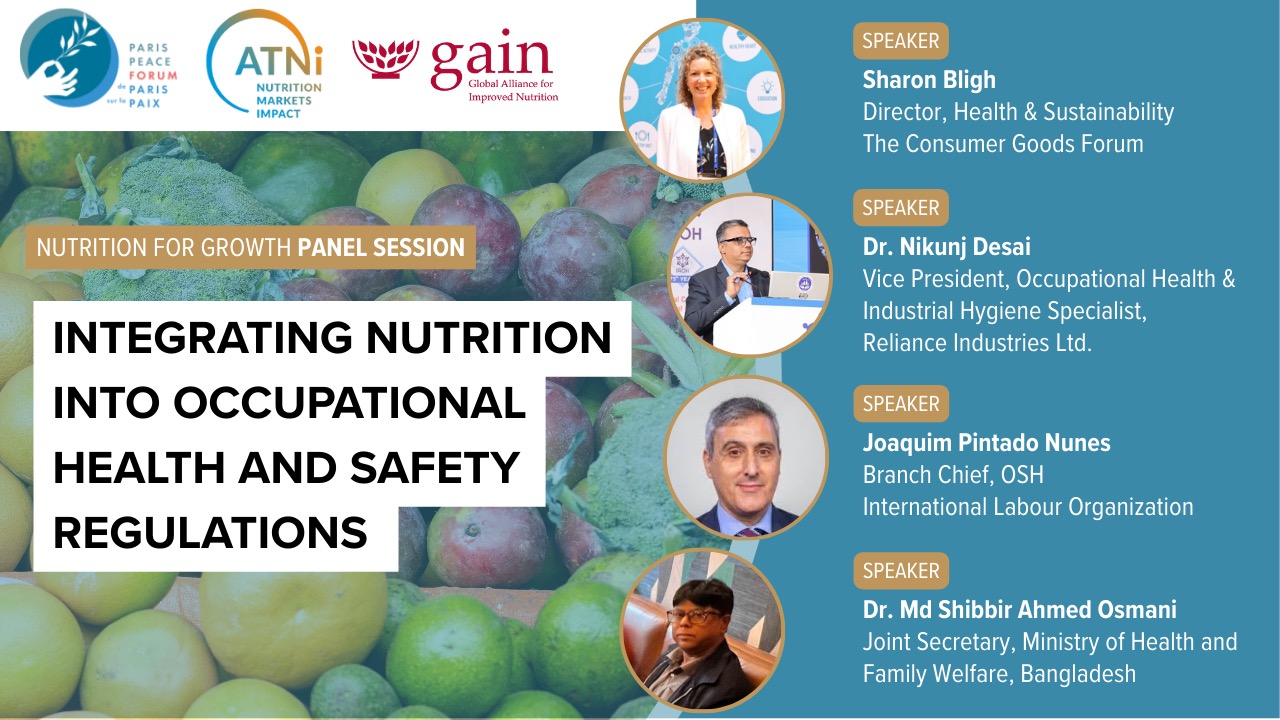
Every four years, the Nutrition for Growth (N4G) Summit brings together governments, businesses, NGOs, and other key players to elevate nutrition as a global development priority. At the 2025 edition, hosted by the French Government in Paris on March 27-28, workforce nutrition emerged as a critical topic. Ahead of the main summit, on March 26, the Global Alliance for Improved Nutrition (GAIN), in collaboration with Access to Nutrition Initiative (ATNI) and Paris Peace Forum, led a high-level panel discussion on “Integrating Nutrition into Occupational Safety and Health (OSH) Regulations.” This session brought together leaders from international organizations, businesses, and governments to discuss how nutrition can be better integrated into OSH policies.
The Urgent Case for Workforce Nutrition
Dr. Bärbel Weiligmann, Global Lead for Workforce Nutrition at GAIN, set the stage by presenting key insights from the Nourishing the Workforce report. The findings highlighted low integration of nutrition into international instruments and national OSH legislations, despite the growing prevalence of worker malnutrition and emerging evidence linking nutrition to improved worker performance.
Nutrition Leaders Opinion
Sharon Bligh, Director of Health & Sustainability at The Consumer Goods Forum, noted the increasing awareness of the benefits of investing in workforce nutrition as evidenced by return on investment. She highlighted companies like Sodexo and Unilever, which have successfully integrated nutrition into their workplace well-being strategies, leading to improved employee health and business performance.
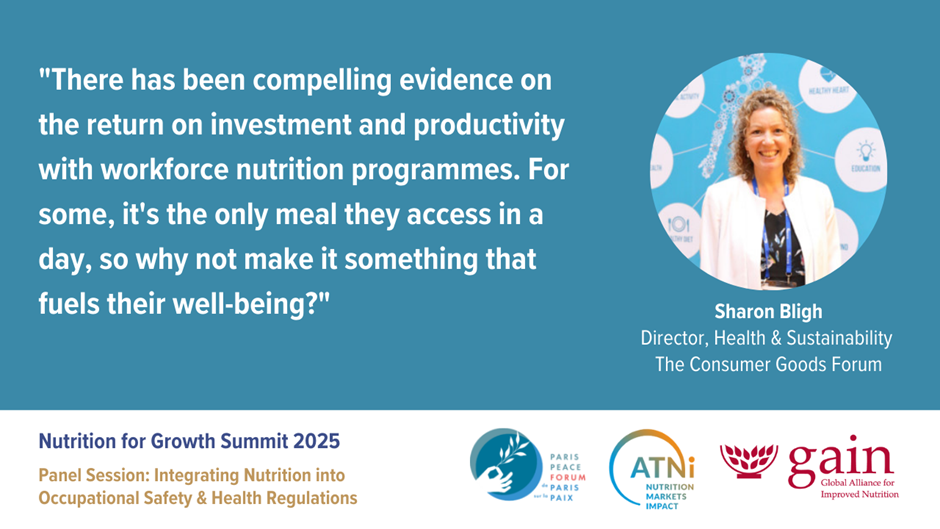
Dr. Nikunj Desai, Vice President, Occupational Health & Industrial Hygiene Specialist at Reliance Industries Ltd, shared how Reliance, one of India’s largest conglomerates, has made workforce nutrition a priority over the years. Recognising the vital link between nutrition, worker productivity, and overall health, the company developed a five-pillar well-being framework covering physical, mental, social, spiritual, and financial health. He noted that Reliance’s leadership firmly believes that a healthier workforce leads to a more profitable company. With tailored solutions, Reliance could reduce pre-diabetes, diabetes, and obesity in their workforce, leading to healthier employees.
Policy Challenges and Government Action
Dr. Md Shibbir Ahmed Osmani, Joint Secretary, Health Service Division at Bangladesh’s Ministry of Health and Family Welfare, outlined the country’s barriers to integrating nutrition into OSH policies. With its massive workforce, Bangladesh has made progress in workforce nutrition, including making the 12 commitments at N4G 2021 and submitting 9 new commitments for N4G 2025.
While Bangladesh is on track with ensuring that nutrition is a priority for the government, it surely has encountered several barriers:
1. Fragmented governance, with multiple ministries lacking coordination;
2. Lack of employer awareness on the importance of nutrition and its link to workforce health and productivity;
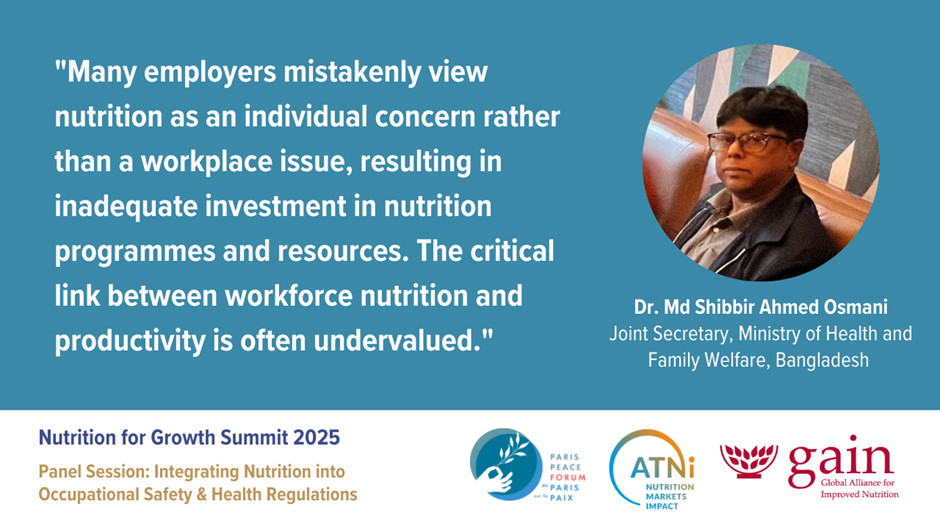
3. Employers do not see nutrition as a workplace priority but as an individual responsibility;
3. Limited government and donor funding support for nutrition initiatives;
4. Workplace environments are dominated by unhealthy food options.
Nonetheless, the government is actively working on labour law amendments, increasing private sector involvement, and improving awareness about the role of nutrition in workplace productivity.
The Role of the International Labour Organization (ILO)
Joaquim Pintado Nunes, Branch Chief of Occupational Safety & Health at the ILO, highlighted the role of ILO in supporting governments and other stakeholders to set workforce nutrition standards. While the ILO has recognized workplace nutrition since 1956 in recommendations on welfare facilities including standards on the establishment of canteens, menus and balanced diet, nutrition is not yet explicitly included in OSH conventions although nutrition is present in ILO guideline documents and codes of practice, especially in the construction, mining, and shipping sectors.
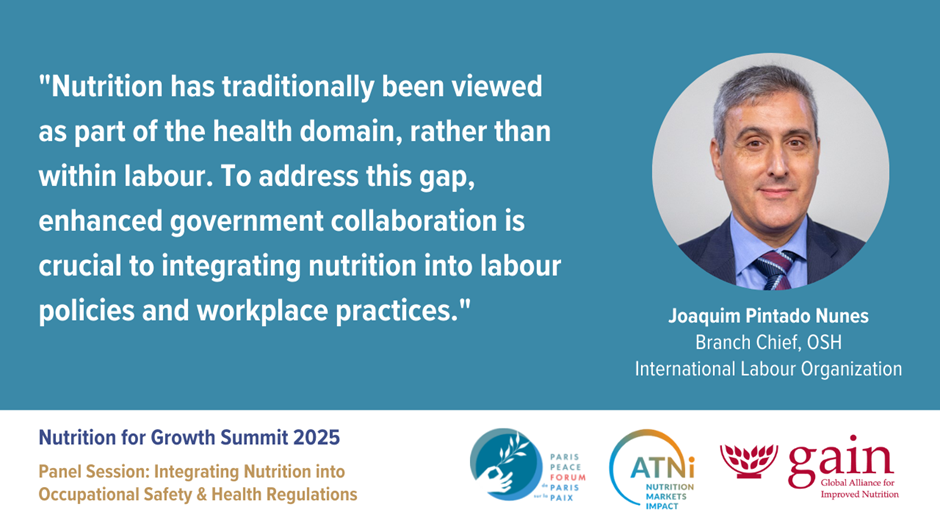
He outlined the challenges to integrating nutrition into OSH regulations:
1. OSH regulations traditionally focus on immediate workplace hazards like accidents and occupational diseases, given that every minute, about 6 workers die due to occupational-related accidents or diseases.
2. A high proportion of informal workers (8 in 10 businesses globally operate informally), where regulations do not always apply, and awareness of workplace nutrition is low.
3. Limited access to occupational health services, especially in developing countries, further reduces attention to nutrition.
To address these challenges and integrate nutrition integration into OSH regulation, Joaquim called for proactive engagement with labor ministries to push for nutrition integration into national OSH policies. He also stressed the need to include nutrition in the capacity-building efforts of government officials, employers, and unions. He encouraged constituents to create awareness of the importance of nutrition so that it will be negotiated in new standards. For nutrition to be integrated into labour policies and OSH laws, Joaquim urged key stakeholders including governments to actively advocate for it.
A Call to Action
The discussion concluded with a collective call for multi-stakeholder collaboration, given the multisectoral nature of nutrition. Joaquim urged governments and businesses to share workplace policies with successful nutrition integration as case studies to inspire action. Dr. Nikunj reinforced the need for governments to prioritize nutrition as a national policy issue. Sharon encouraged businesses to explore the practical tools available to support workforce nutrition initiatives and build a business case for it, while Dr. Osmani reiterated Bangladesh’s commitment to expanding its workforce nutrition programs.
As the world moves forward, one thing is clear: workforce nutrition is not just a health issue—it’s an economic and productivity imperative. The discussions at N4G 2025 laid the groundwork for stronger policies, greater business involvement, and a future where nutrition could become a fundamental part of occupational safety and health regulations.
Stay tuned for more updates on the future of workforce nutrition!