
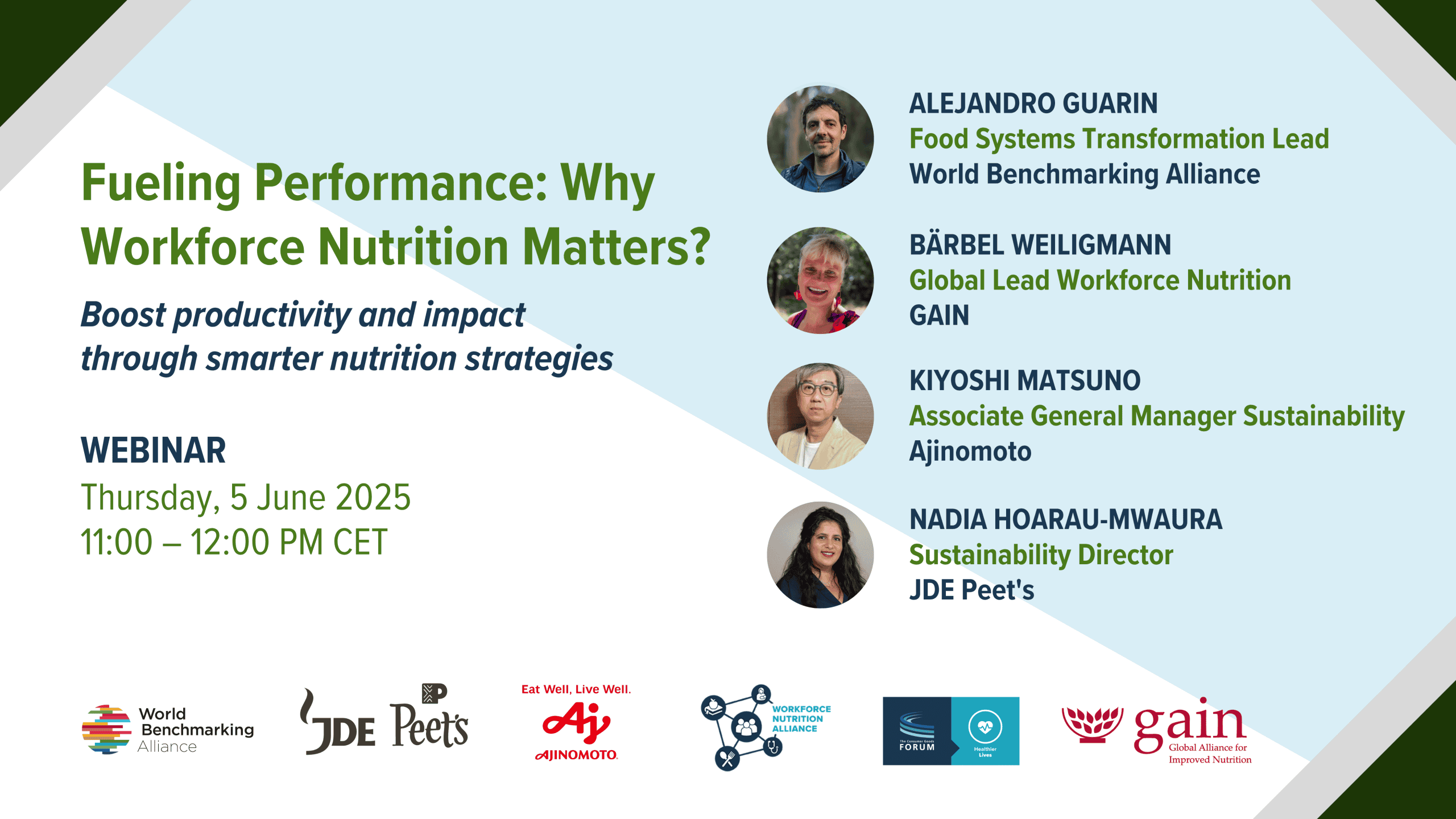
On 5 June 2025, the Workforce Nutrition Alliance (WNA) hosted a high-impact webinar titled “Fueling Performance: Why Workforce Nutrition Matters” The session, co-convened by The Global Alliance for Improved Nutrition (GAIN) and The Consumer Goods Forum (CGF), brought together about 40 participants from across the globe to explore how investing in workforce nutrition drives business performance, improves employee well-being, and delivers meaningful impact.
The webinar featured compelling insights from speakers representing the World Benchmarking Alliance (WBA), Ajinomoto Group, and JDE Peet’s—all of whom are actively championing workforce nutrition (WFN) as a strategic business priority.
The webinar highlighted the recently released WBA 2025 methodology under the Food and Agriculture Benchmark. The Food & Agric. benchmark ranks 350 of the most influential global food and agriculture companies, measuring performance across various sustainability indicators, including the Workforce Nutrition indicator. The modified methodology highlighted how scoring on workforce nutrition, specifically healthy food at work and breastfeeding pillars, allows companies to score between 5 and 15 points, contributing to the overall score.
The Ajinomoto Group shared its corporate journey toward embedding WFN across its global operations. With 34,000 employees and 116 factories in 24 countries, Ajinomoto has implemented the four pillars of workforce nutrition, including healthy food provision, nutrition education, health check-ups, and maternity protection, tailored to local contexts. In Japan, this has led to a reduced Body Mass Index, blood sugar, and blood pressure among the workers. Driven by its founding aspiration to help people “Eat Well, Live Well,” and through its core commitment to AminoScience, Ajinomoto positions employee well-being as foundational to business success.
JDE Peet’s presented a compelling case study from tea estates in Tamil Nadu, India, where it is addressing malnutrition among tea estate workers, driven by poor dietary diversity, limited access to nutritious foods, and poor hygiene and sanitation. Through a targeted WFN intervention focused on increasing access to nutrition via Estate Retail Shops and door-to-door sales, JDE Peet has reached 8,000 workers across 12 tea estates. This model not only improves food availability and affordability but also promotes healthier eating habits and long-term health outcomes for workers and their families.
Kindly watch the full webinar recording to gain more insights.
Please find the webinar presentations below: