

Non-communicable diseases (NCDs) are the leading cause of mortality and disability worldwide, accounting for an alarming 74% of all deaths [1]. The burden is especially high in low- and middle-income countries, where nearly three-quarters of these deaths occur[2]. Diseases like diabetes, cancer, cardiovascular conditions, and chronic respiratory illnesses are projected to increase by 17% in the next ten years, driven by sedentary lifestyles and unhealthy diets [3].
NCDs are chronic diseases that are not transmitted from person to person but are driven by a combination of genetic, environmental, physiological, and behavioural factors, including unhealthy diets, physical inactivity, tobacco use, and excessive alcohol consumption [4]. Between 2011 and 2030, NCDs are projected to cost the global economy US$30 trillion, placing immense strain on individuals, communities, and healthcare systems [5]. Yet the cost of prevention is significantly lower than the cost of inaction. Implementing cost-effective strategies to reduce NCD risks in low- and middle-income countries would require just US$11.4 billion annually [6]. An investment of less than US$0.20 per person in low-income countries, and around US$0.50 per person in upper-middle-income countries, is sufficient to implement proven interventions to reduce the burden of NCDs [7].
How Workforce Nutrition Can Lower the Risk of NCDs
Poor nutrition is a major driver of the global rise in NCDs. Diets high in salt, added sugars, trans fats, and ultra-processed foods, combined with low intake of fruits, vegetables, whole grains, and healthy fats, are strongly associated with an increased risk of cardiovascular diseases, type 2 diabetes, obesity, certain cancers, and other chronic diseases [8,9].
Workforce nutrition offers a practical and scalable solution to help address the growing burden of NCDs. Since most working adults spend a third of their lives at work, and consume at least one meal at work, the workplace presents a valuable intervention point to promote healthier eating habits. This is particularly relevant in today’s increasingly sedentary working environments, where desk-based jobs and limited physical activity heighten the risk of NCDs [10].
Improving nutrition in the workplace is not only a health goal, but also a strategic business investment. Preventing NCDs through targeted nutrition interventions can enhance employee performance, reduce healthcare costs, and promote long-term workforce well-being. Employers can play a central role by providing access to healthier food options, integrating health and nutrition education, and fostering a food environment that supports better choices.
These interventions go beyond individual benefits. A well-nourished workforce has been shown to experience lower rates of absenteeism and presenteeism, reduced incidences of early retirement and long-term disability, and improved overall productivity. Employees also report higher energy levels, enhanced cognitive function, better morale, and improved quality of life when their nutritional well-being is supported. Read the case studies here.
To achieve these outcomes, a comprehensive workforce nutrition programmes, grounded in four key pillars, provide a structured and impactful approach to improving employee health and well-being:
Healthy Diets at Work
- Access to Nutritious Meals: Ensure employees have access to nutritious meals and snacks through on-site canteens and vending machines.
- Increased Availability of Fresh Produce: Offer a greater selection of fruits, vegetables, and whole grains in workplace food options.
- Reduced Unhealthy Fats: Provide food options with lower levels of saturated fats and trans fats, and reduced salt and sugar.
- Incentives for Healthy Choices: Offer discounts or subsidies on healthier food choices to encourage better eating habits.

Nutrition Education
- Workshops and Seminars: Organize workshops and seminars to educate employees on the benefits of healthy eating and how to incorporate it into their daily lives.
- Access to Clinical Nutritionists: Provide access to clinical nutritionists who can offer personalized nutrition assessments and guidance.
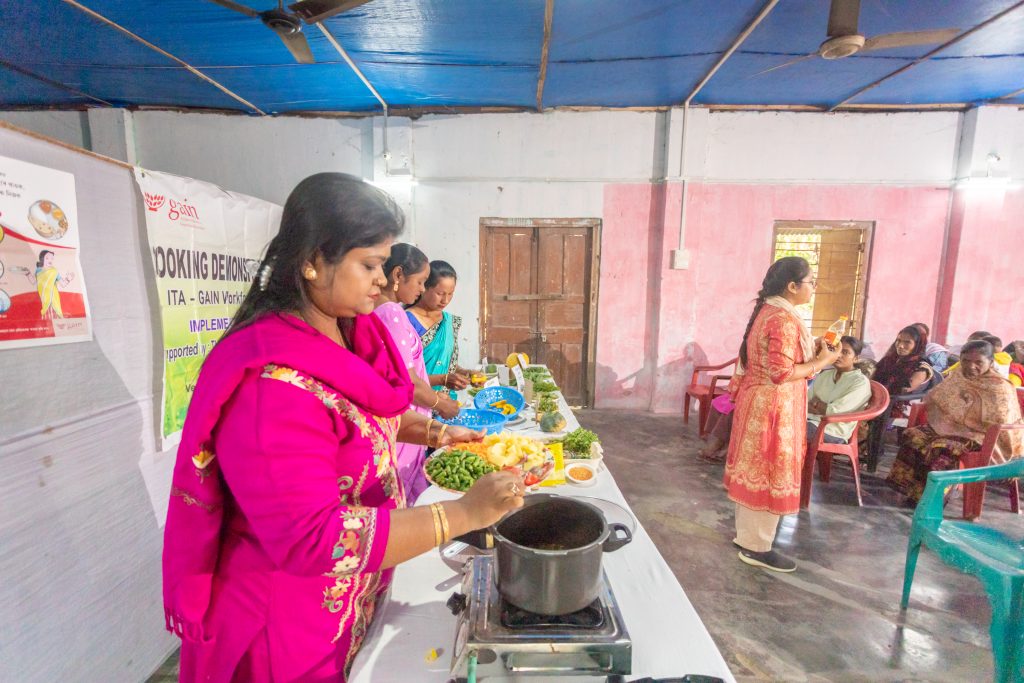
- Cooking Demonstrations: Host interactive cooking demonstrations to inspire employees to prepare and enjoy nutritious meals at home.
- Educational Materials: Distribute resources such as online courses, newsletters, posters, and digital tools to promote nutrition awareness.
Breastfeeding Support
Evidence shows that infants that receive optimal nutrition through breastfeeding during their early development have a lower risk of developing NCDs later in life [11]. Breastfeeding support at the workforce plays a key role in enabling early nutrition, reducing the likelihood of childhood obesity, enhancing immune function, and lowering the risks of chronic diseases in adulthood.

- Designated Breastfeeding Rooms: Provide private, comfortable spaces for breastfeeding with necessary facilities such as milk storage.
- Breastfeeding Awareness: Educate employees on the importance of breastfeeding and create a supportive environment for new mothers.
- Flexible Work Policies: Implement policies that allow flexible hours and breaks to accommodate the needs of nursing mothers.

Nutrition Focused Health Checks

- Regular Screenings: Implement routine health screenings to assess nutritional status, identify any potential risk factors for chronic diseases and offer targeted counselling.
- Digital Tracking Tools: Utilize apps and digital tools to help employees track their dietary habits and set personalized health goals.
- One-on-One Counselling: Offer personalized nutrition counselling to support employees in creating and following individualized nutrition plans.
The Road Ahead: Tackling NCDs through Workforce Nutrition
The rise in non-communicable diseases calls for urgent, coordinated action, and the workplace presents a key opportunity to drive change. By integrating nutrition into workplace policies and practices, employers can play a key role in reducing NCD risks, improving employee wellbeing, and strengthening business outcomes.
Discover how the Workforce Nutrition Alliance can support you in building a supportive workplace. Visit workforcenutrition.org to explore our resources, and services, and take the first step toward a healthier, more productive workforce.
References
- World Health Organization: WHO. 2024. “Noncommunicable diseases.” December 23, 2024. https://www.who.int/news-room/fact-sheets/detail/noncommunicable-diseases.
- Ibid.
- Habib, Samira Humaira, and Soma Saha. 2008. “Burden of Non-communicable Disease: Global Overview.” Diabetes & Metabolic Syndrome Clinical Research & Reviews 4 (1): 41–47. https://doi.org/10.1016/j.dsx.2008.04.005.
- Budreviciute, Aida, Samar Damiati, Dana Khdr Sabir, Kamil Onder, Peter Schuller-Goetzburg, Gediminas Plakys, Agne Katileviciute, Samir Khoja, and Rimantas Kodzius. 2020. “Management and Prevention Strategies for Non-communicable Diseases (NCDs) and Their Risk Factors.” Frontiers in Public Health 8 (November). https://doi.org/10.3389/fpubh.2020.574111.
- Bloom, David E., Elizabeth T. Cafiero, Eva Jané-Llopis, Sanjay Abrahams-Gessel, Larry R. Bloom, Sandeep Fathima, Angela B. Feigl, Thomas Gaziano, Malek Mowafi, Aditya Pandya, Klaus Prettner, Lindsey Rosenberg, Brittany Seligman, Adam Z. Stein, and Christopher Weinstein. The Global Economic Burden of Noncommunicable Diseases. Geneva: World Economic Forum, 2011.
- World Health Organization. Global Status Report on Noncommunicable Diseases 2010. Geneva: World Health Organization, 2011. https://iris.who.int/bitstream/handle/10665/44706/9789241502313_eng.pdf.
- Ibid.
- Ahmad, Rahnuma, Farhana Akter, and Mainul Haque. 2023. “Editorial: Diet and Nutrition for Non-communicable Diseases in Low and Middle-income Countries.” Frontiers in Nutrition 10 (March). https://doi.org/10.3389/fnut.2023.1179640.
- De Araújo, Taissa Pereira, Milena M. De Moraes, Vânia Magalhães, Cláudia Afonso, Cristina Santos, and Sara S. P. Rodrigues. 2021. “Ultra-Processed Food Availability and Noncommunicable Diseases: A Systematic Review.” International Journal of Environmental Research and Public Health 18 (14): 7382. https://doi.org/10.3390/ijerph18147382.
- Wu, Jingjie, Yujia Fu, Dandan Chen, Hui Zhang, Erxu Xue, Jing Shao, Leiwen Tang, Binyu Zhao, Chuyang Lai, and Zhihong Ye. 2023. “Sedentary Behavior Patterns and the Risk of Non-communicable Diseases and All-cause Mortality: A Systematic Review and Meta-analysis.” International Journal of Nursing Studies 146 (July): 104563. https://doi.org/10.1016/j.ijnurstu.2023.104563.
- Singhal, Atul. 2016. “The Role of Infant Nutrition in the Global Epidemic of Non-communicable Disease.” Proceedings of the Nutrition Society 75 (2): 162–68. https://doi.org/10.1017/s0029665116000057.
- O’Hearn, Meghan, Laura Lara-Castor, Frederick Cudhea, Victoria Miller, Julia Reedy, Peilin Shi, Jianyi Zhang, et al. 2023. “Incident Type 2 Diabetes Attributable to Suboptimal Diet in 184 Countries.” Nature Medicine 29 (4): 982–95. https://doi.org/10.1038/s41591-023-02278-8.