
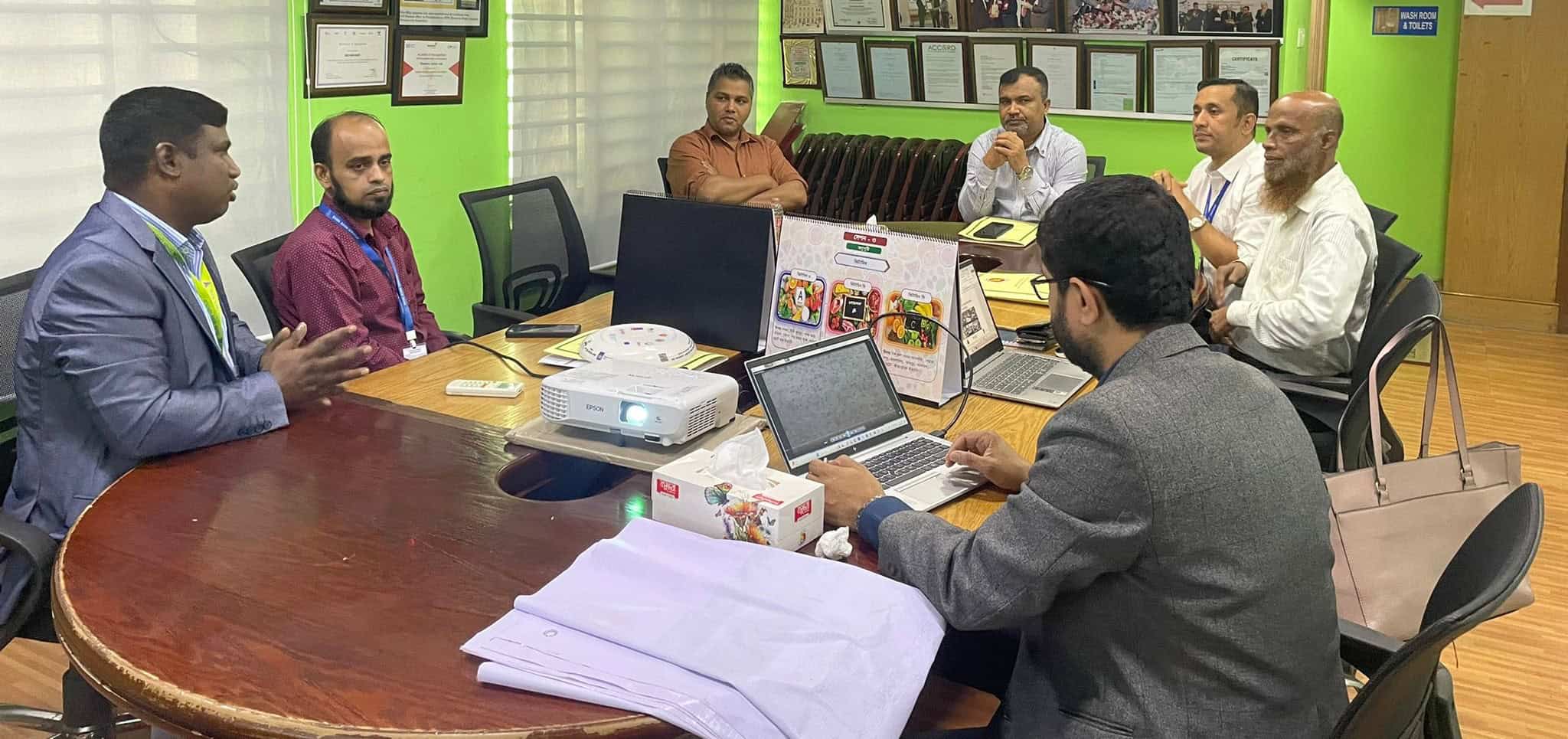
They say, “the reward for good work is more work.” For the Bangladesh Workforce Nutrition Alliance (WNA), this couldn’t be truer. What began as a simple handshake in 2022 between the Department of Labour (DoL) under the Ministry of Labour and Employment (MoLE) and the Global Alliance for Improved Nutrition (GAIN) has blossomed into a national movement that’s transforming the way workers eat, live, and thrive.
From Workshops to Waves of Change
The WNA was launched with a bold mission: to improve the health and productivity of Bangladesh’s workforce through nutrition. Armed with the proven 4-pillar Workforce Nutrition model – access to healthy food, nutrition education, breastfeeding support, and health-focused health checks, the WNA set out to reach those often left behind: the workers!
Their early steps were small but strategic—sensitization workshops across key industries in Khulna, Chattogram, Bogura, Narayanganj, Dhaka, Jamalpur, and Sylhet regions. These workshops brought together over 367 participants and 925 port workers, sowing the seeds of nutrition awareness. In addition, the Alliance conducted 6 Training of Trainers (ToT) sessions, certifying 492 master trainers who now cascade nutrition knowledge and best practices to over 1,700 employees.
Fighting the Hidden Hunger
In a country where iron deficiency, a major cause of anaemia affects nearly 3 in 4 people and has persisted for 30 years, WNA decided to act. They distributed over 4 million Iron and Folic Acid (IFA) tablets to workers turning the tide against a silent but serious public health challenge that drains the nation’s productivity. This has reduced tiredness and weakness among workers and increased productivity.
Building a Movement
As word spread and impact became visible, interest in the Alliance grew. From zero in 2022, WNA’s membership has grown to 255 organisations across sectors, including the ready-made garments (RMG), salt, agro-food processing, hatcheries, fish processing, civil society, and academia. These are not just numbers; they represent a growing belief that investing in workforce nutrition is good for people and good for business.
When Business Joins the Battle
WNA’s advocacy has not just raised awareness, it sparked commitment. In the Mymensingh Division, six companies (Jabed Agro Food Processing Ltd, Jamalpur Central Hospital Ltd, RCI Ltd, Hazrat Shahjamal General Hospital Ltd, M.K Plastic Industries, and Shatadol Hostoshilpo Karukala) stepped up by signing the Zero Hunger Private Sector Pledge – a bold commitment for companies to join forces in ending hunger. Together, they’ve pledged BDT 93.2 million towards workforce nutrition. Organisations are becoming aware of how improved nutrition and health of workers lead to stronger and more resilient businesses.
“We work mostly with village women. This work gives them confidence and the ability to contribute to their families. Women here endure many hardships in life, so I try to support them with healthcare and help them live with social dignity.” Md. Sahinur Alam, Owner, Shatadol Hostoshilpo Karukala
“Most people working in this sector are very poor and vulnerable to illness. I try to support them by providing occasional food assistance for them and their families, along with coverage for basic healthcare costs so they can stay healthy and continue working.” Md. Anamul Haque Khan Milon, Director, M.K. Plastic Industries
The journey is far from over. With a clear strategy in place and more partners joining every day, WNA is setting the stage for even greater impact. What began with a handshake has turned into a model for collaboration, proving that lasting change starts with shared purpose. As more hands join in, the future of workforce nutrition in Bangladesh looks not just promising but unstoppable.